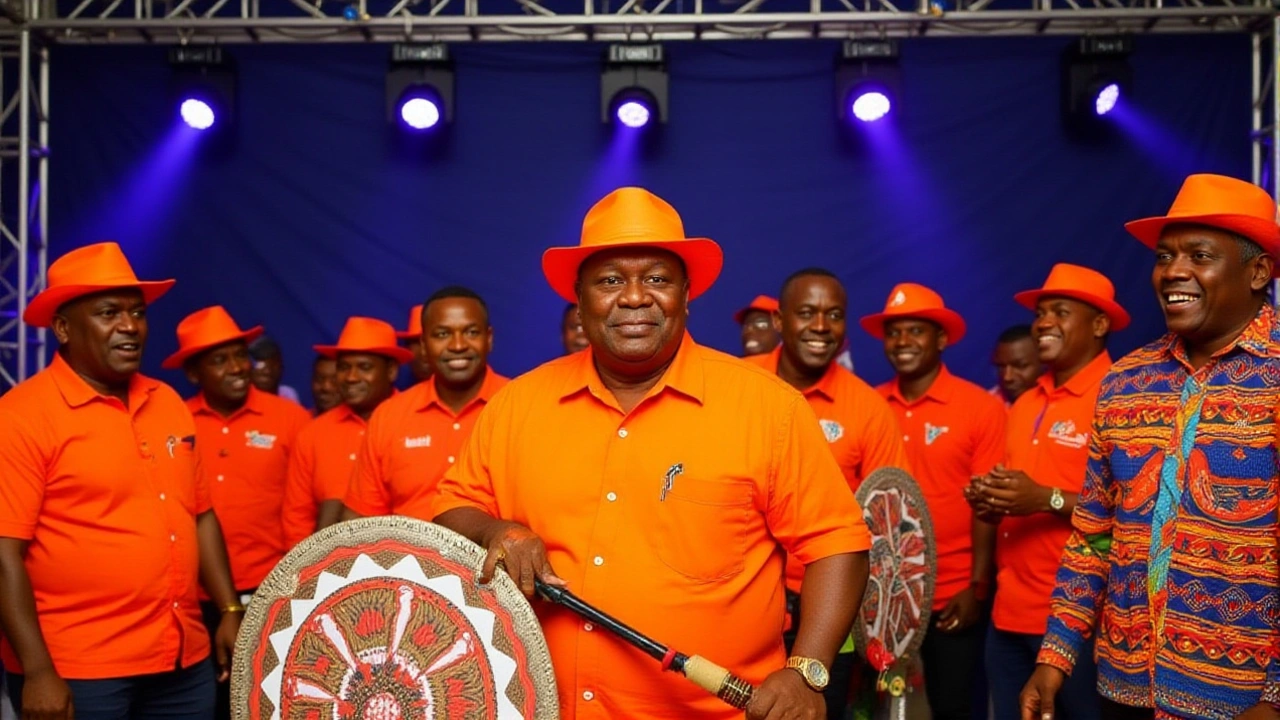
Oburu Odinga: Kenya's Political Veteran and His Role in African Leadership
When you think of Oburu Odinga, a senior Kenyan politician and long-time member of parliament known for his sharp critiques and deep roots in Luo politics. Also known as Senator Oburu Odinga, he’s one of the most persistent voices in Kenya’s National Assembly, often challenging government moves with facts, not just rhetoric. He’s not just a politician—he’s a fixture. His career spans decades, and he’s watched Kenya shift from one-party rule to a more complex, multi-party democracy. Unlike many who fade into retirement, Oburu stayed in the arena, using his seat to push for transparency, accountability, and regional equity. He’s the kind of leader who shows up, speaks up, and doesn’t wait for applause.
Oburu Odinga’s influence ties directly to the broader Odinga family, a political dynasty in Kenya that has shaped the country’s opposition movements since the 1960s. His brother, Raila Odinga, is the more internationally recognized name—former prime minister, presidential candidate, and symbol of resistance. But Oburu operates differently. He doesn’t run for president. He doesn’t seek the spotlight. He works behind the scenes in the Senate, building coalitions, questioning budgets, and holding ministries accountable. His style is methodical, not theatrical. That’s why he’s trusted by both allies and opponents. He’s not just part of the Odinga legacy—he’s a keeper of its practical side.
His work also connects to the larger story of African leadership, how seasoned politicians navigate power in young democracies without falling into corruption or authoritarianism. In places where leaders cling to power or silence critics, Oburu’s persistence is a quiet rebellion. He’s been vocal about electoral integrity, land rights in western Kenya, and the need for youth inclusion in governance. He’s not flashy, but he’s consistent. And in a region where political turnover is often chaotic, that kind of steadiness matters.
What you’ll find in the posts below isn’t a list of headlines about Oburu Odinga’s speeches or rallies. It’s the context around him—the political currents he moves in, the institutions he challenges, the regions he represents. You’ll see how his actions ripple through Kenya’s parliament, how his family’s legacy influences national elections, and how his brand of politics fits into Africa’s broader struggle for accountable leadership. There’s no hype here. Just the real, messy, important work of a man who’s been in the room when it counted.