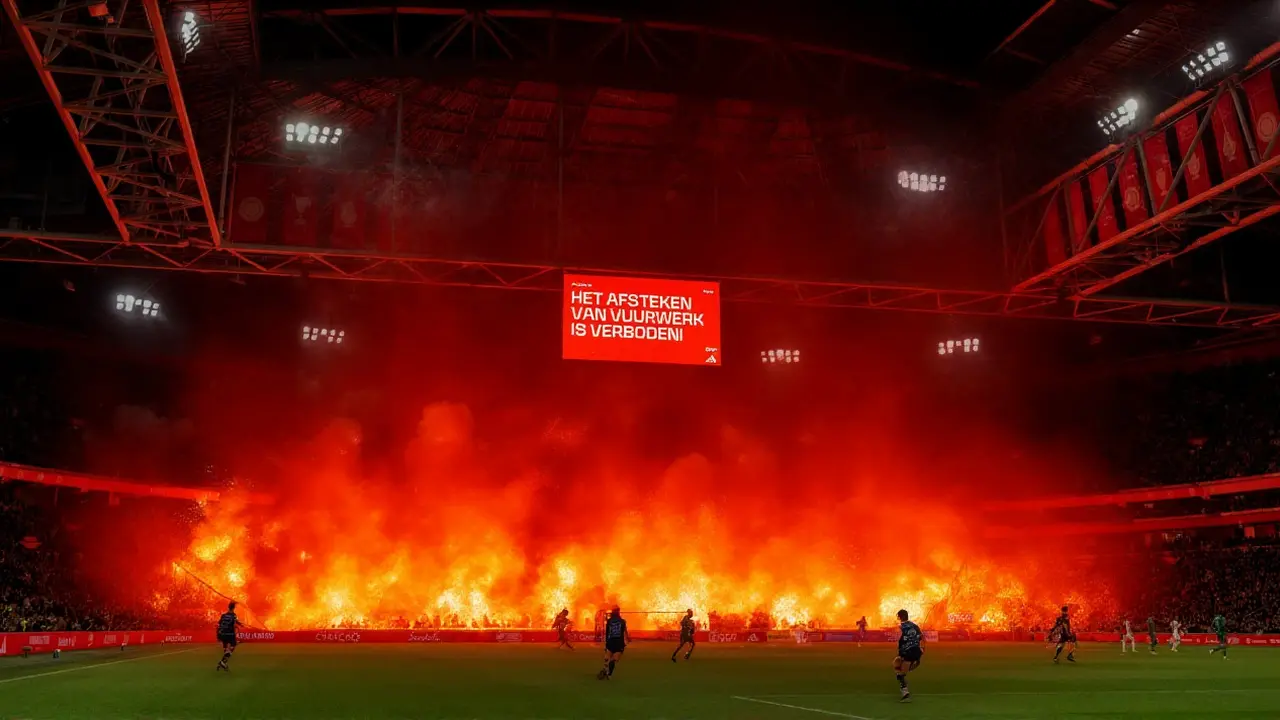
Football matches are supposed to be about skill, tactics, and passion. But on Sunday evening, the Johan Cruyff Arena in Amsterdam became a scene of chaos that had nothing to do with the game itself. The Ajax versus FC Groningen fixture was abandoned just five minutes after kick-off, not because of a red card or an injury, but because supporters ignited fireworks and flares directly behind one of the goals.
Referee Bas Nijhuis, tasked with maintaining order, made the difficult call to lead both teams off the pitch. It wasn’t a temporary stoppage for safety checks; it was a complete halt. When officials attempted to restart the match, the same disruptive behavior continued. The result? A formal abandonment of the Eredivisie matchJohan Cruyff Arena with the score still locked at 0-0.
A Five-Minute Disaster
Here’s the thing: this didn’t happen after hours of tension building up. It happened almost immediately. According to reports, the disturbances began within the first five minutes of play. Supporters positioned in the stands behind one of the goals set off pyrotechnics, creating a smoke-filled and dangerous environment for players, staff, and other fans.
Nijhuis, known for his strict adherence to protocol, didn’t hesitate. He gathered the captains and led the players off the field. The logic is simple: you can’t play football when the stadium feels like a war zone. But the twist is that this wasn’t a one-off incident. Once the dust settled slightly, officials tried to resume the game. Within moments, more fireworks were lit. That repetition sealed the fate of the match. There was no second chance.
The Official Response and Rescheduling
In the wake of the abandonment, Ajax took to social media to clarify the situation. In an official tweet, the club stated: “The match between Ajax and FC Groningen will resume on Tuesday at 14:30. The game was abandoned on Sunday evening after repeated fireworks were set off, with the score at 0-0.”
This announcement serves two purposes. First, it confirms the reason for the cancellation—“repeated fireworks”—highlighting that the issue was persistent, not accidental. Second, it provides a clear timeline for resolution. The match will continue on Tuesday afternoon, picking up from where it left off. This means the clock will start again, but the score remains 0-0. For fans who bought tickets for Sunday, the inconvenience is real. For the league, the disruption is significant.
Why This Matters Beyond the Pitch
Let’s be honest: pyrotechnics in stadiums are a recurring problem in European football. They’re often romanticized as part of the culture, especially by ultras groups. But the reality is different. Fireworks pose serious fire hazards, cause respiratory issues for those nearby, and create panic among families and children attending matches.
The description of the events as “utterly outrageous” by some observers isn’t hyperbole. It reflects a growing frustration among authorities, clubs, and responsible fans. The Eredivisie, like other top leagues, has been tightening rules around banned substances in stadiums. Yet, enforcement remains challenging. When incidents occur at high-profile venues like the Johan Cruyff Arena, they send a message that goes beyond one game. They question the safety standards and the culture of fan behavior.
What Happens Next?
The immediate future is clear: the match resumes on Tuesday at 14:30 local time. But the longer-term consequences are still unfolding. Typically, such incidents trigger investigations by league authorities. Clubs may face fines, point deductions, or even playing behind closed doors if patterns of misconduct emerge. While no disciplinary actions have been announced yet, expect statements from the Dutch Football Association (KNVB) in the coming days.
For FC Groningen, the away trip turned into a logistical nightmare. Players trained for a full 90-minute contest only to play five minutes. For Ajax, hosting a home game that ends in abandonment is embarrassing. Both clubs now face the task of managing fan expectations and ensuring security for the rescheduled fixture.
Historical Context: A Pattern of Disruption
This isn’t the first time Ajax matches have faced disruptions due to fan behavior. Over the years, there have been instances of pitch invasions, banner controversies, and yes, pyrotechnic use. However, the scale and timing of this incident stand out. Abandoning a match so early in the game is rare. It underscores how quickly things can spiral out of control when safety protocols are ignored.
Compare this to similar incidents in other leagues. In England, Premier League matches have been stopped due to missile throwing and crowd trouble. In Italy, Serie A has seen games halted over flare usage. Each case leads to stricter regulations. The question now is whether the Eredivisie will follow suit with harsher penalties or if this will be treated as an isolated event.
Frequently Asked Questions
When will the Ajax vs FC Groningen match resume?
The match is scheduled to resume on Tuesday at 14:30 local time at the Johan Cruyff Arena. The game will pick up from the exact moment it was abandoned, with the score remaining 0-0.
Why was the match abandoned?
The match was abandoned due to repeated incidents of supporters igniting fireworks and flares in the stands behind one of the goals. Referee Bas Nijhuis halted play after five minutes, and when the behavior continued during a restart attempt, the game was formally called off.
Will there be disciplinary action against Ajax or its fans?
While no official sanctions have been announced yet, such incidents typically trigger investigations by the KNVB. Potential penalties could include fines for the club, bans for individuals involved, or restrictions on future home games if safety concerns persist.
How does this affect the Eredivisie standings?
Since the match was abandoned before any goals were scored, no points were awarded. The result will be determined by the outcome of the resumed match on Tuesday. Until then, the standings remain unchanged regarding this fixture.
Is it common for matches to be abandoned this early?
It is relatively rare for professional matches to be abandoned within the first five minutes. Most stoppages occur later in the game due to weather, crowd trouble, or player injuries. This incident highlights the severity of the safety breach.